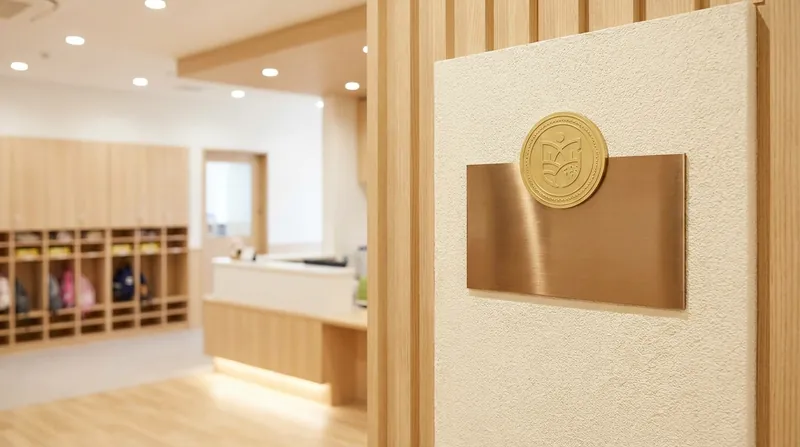
QualiKita: The Path to the Quality Label
QualiKita: The Path to the Quality Label
Quality in childcare is what concerns parents the most — and what daycare operators often struggle to make tangible. How do you prove that your daycare is "good"? One answer is QualiKita: the national quality label for daycare centres in Switzerland.
This guide explains what QualiKita is about, how the certification process works, what it costs and whether the investment is worthwhile. Whether you are currently setting up a daycare or looking to further develop an existing facility — QualiKita can be an important milestone.
What Is QualiKita?
QualiKita is a national quality label for daycare centres. It was launched in 2013 and is jointly supported by:
- kibesuisse (Swiss Childcare Association) — the largest industry association
- Jacobs Foundation — one of the most important Swiss foundations in the field of early childhood education
The label certifies that a daycare systematically works on its quality and meets defined standards in six quality areas. QualiKita is voluntary — there is no legal obligation. But it is increasingly recognised by municipalities, cantons and parents as proof of quality.
QualiKita in Numbers
- Over 200 certified daycare centres across Switzerland (as of 2026)
- Recognised in all language regions
- Considered by several cantons and municipalities as a quality criterion for subsidies
The 6 Quality Areas of QualiKita
QualiKita assesses the quality of a daycare based on six areas. For each area, there are specific indicators and standards:
1. Pedagogical Quality
- Is there a written pedagogical concept?
- How is children's development observed and documented?
- How are children supported in their learning processes?
- Are transitions (settling in, moving to kindergarten) professionally guided?
2. Collaboration with Parents
- Do regular parent meetings take place?
- Are parents informed about their child's daily life?
- Are there parent evenings or other formats for exchange?
- How are complaints handled?
3. Team Quality
- What qualifications does the staff have?
- Are there regular team meetings?
- Are staff systematically trained further?
- What is the staffing situation (turnover, satisfaction)?
4. Leadership and Organisation
- Is there a clear organisational structure?
- How are decisions made?
- Is there a mission statement that is actively followed?
- How is financial sustainability ensured?
5. Infrastructure and Safety
- Are the premises designed to be child-friendly?
- Do they meet safety standards?
- Is there sufficient space (indoors and outdoors)?
- Are hygiene and nutrition concepts in place?
6. Quality Development
- Is there a systematic quality management system?
- Are self-evaluations carried out?
- Are improvement measures documented and implemented?
- Is feedback from parents and staff collected?
Certification Process: Step by Step
The path to the QualiKita label proceeds in several phases:
Phase 1: Registration and Preparation (3–6 Months)
- Registration with the QualiKita office
- Attend an information event or have an initial meeting
- Self-evaluation: You assess your daycare against the QualiKita criteria catalogue yourself. This is an intensive examination of your own quality.
- Development plan: Where is there a need for action? What measures do you want to implement?
Phase 2: Implementation (6–12 Months)
- Implement measures: Realise improvements in the identified areas
- Documentation: Compile all relevant documents (concepts, processes, minutes)
- Coaching/support: Optionally, you can bring in an external specialist for preparation
Phase 3: External Evaluation (1–2 Months)
- External visit: A trained evaluation team visits your daycare. The visit includes:
- Observation of daily care routines
- Conversations with management, team and parents
- Review of documentation
- Evaluation report: The team produces a report with strengths, weaknesses and recommendations
Phase 4: Certification
- Decision: The QualiKita commission decides on awarding the label
- Certificate: If the decision is positive, you receive the QualiKita label (valid for 4 years)
- Interim evaluation: An interim evaluation takes place after 2 years
- Re-certification: The label must be renewed after 4 years
Costs of Certification
The costs for QualiKita certification depend on the size of the daycare:
| Cost Item | Amount (approx.) |
|---|---|
| Registration fee | CHF 500–800 |
| Self-evaluation (internal, time investment) | 40–80 hours of work |
| External evaluation | CHF 3,000–6,000 |
| Coaching/consulting (optional) | CHF 1,000–3,000 |
| Total initial certification | CHF 5,000–10,000 |
| Re-certification (every 4 years) | CHF 3,000–5,000 |
Funding Options
- Municipal contributions: Some municipalities contribute to certification costs or take QualiKita into account when granting subsidies
- Foundations: The Jacobs Foundation and other foundations sometimes offer support grants
- kibesuisse members: Members of kibesuisse receive discounts
Time Investment: How Long Does the Process Take?
From registration to certification, it typically takes 12 to 18 months. The effort is distributed as follows:
| Phase | Duration | Time Investment (approx.) |
|---|---|---|
| Registration and preparation | 3–6 months | 40–60 hours |
| Implementation of measures | 6–12 months | Ongoing (integrated into daily operations) |
| External evaluation | 1–2 months | 10–20 hours |
| Decision | 1–2 months | Waiting |
| Total | 12–18 months | 60–100+ hours |
The biggest effort lies in the self-evaluation and the implementation of measures. Both can be well integrated into daily operations.
Benefits of the QualiKita Label
For the Daycare
- Quality development: The process itself is valuable — you systematically reflect on what is going well and where you can improve
- Differentiation: In a competitive market, you stand out from competitors
- Subsidies: More and more municipalities take QualiKita into account when awarding subsidies and service agreements
- Team strengthening: Working together on the label strengthens team spirit and identification with the daycare
- Parental trust: The label builds trust with parents looking for childcare
For Parents
- Transparency: Parents can rely on the fact that a certified daycare meets defined standards
- Guidance: When searching for a daycare, the label helps assess quality
- Participation: In the QualiKita process, parent feedback is systematically collected
Tip: If you have the QualiKita label, communicate it actively — on your kizi.ch profile, on your website, in parent letters and in the entrance area of your daycare. Learn more about how to optimise your profile on kizi.ch.
Alternatives to QualiKita
QualiKita is not the only quality instrument. Depending on the canton and orientation, there are alternatives:
| Label/Standard | Description | Prevalence |
|---|---|---|
| QualiKita | National quality label (kibesuisse + Jacobs Foundation) | Nationwide, >200 daycare centres |
| ISO 9001 | International quality management standard | Rare in daycare centres, more for large organisations |
| educaris | Quality standards for daycare centres in French-speaking Switzerland | Western Switzerland |
| Cantonal quality requirements | Each canton has its own minimum standards | Mandatory as part of the licence |
| kibesuisse guidelines | Recommendations from the industry association | Voluntary but widespread |
| Own QM system | Internal quality management of the daycare | Individual |
What Is Better: QualiKita or Your Own QM?
The two are not mutually exclusive. QualiKita offers the advantage of external validation — the label says: "An independent body has confirmed that we are good." An internal QM system is the foundation on which QualiKita builds. The ideal approach is a combination.
Experience Reports: What Do Certified Daycare Centres Say?
Daycare centres that have gone through the process consistently report:
- The process is demanding but rewarding. The self-evaluation forces you to look closely — and that sometimes hurts, but always brings benefits.
- The team grows together. Working together on the label creates cohesion and gives daily work a shared direction.
- Parents react positively. Many parents mention the label when registering as a reason for their choice.
- The administrative effort is often overestimated. Much of what QualiKita requires, you are already doing — you just document it better.
Frequently Asked Questions (FAQ)
Is QualiKita worthwhile for small daycare centres (under 12 places)?
Yes. The quality areas apply regardless of size. Small daycare centres even benefit particularly because the process is manageable and quickly shows results. However, the costs can be relatively higher.
Do I need QualiKita to receive subsidies?
No, QualiKita is not a prerequisite for subsidies. But more and more municipalities take the label positively into account in service agreements. In some municipalities, there is even a financial bonus for certified daycare centres.
Can I get QualiKita as a playgroup?
QualiKita is primarily aimed at daycare centres. For playgroups, there are other quality standards, such as the guidelines of the SSLV.
What happens if I don't pass the certification?
You receive a report with the points that are not yet met and a timeframe for improvement. Certification is not a "pass or fail" but a development process.
How can I as a parent tell if a daycare is QualiKita-certified?
Certified daycare centres are allowed to display the QualiKita logo and are listed on the QualiKita website. On kizi.ch, providers can indicate their certification in their profile. You can find more about recognising quality in our parent guide Recognising daycare quality.
Conclusion: QualiKita as an Investment in the Future
QualiKita is more than a sticker on the door. It is a systematic process of quality development that sustainably improves your daycare. The investment of CHF 5,000–10,000 and 12–18 months of work pays off — through happier parents, more motivated staff, better chances of subsidies and a clear competitive advantage.
The key points:
- Start with the self-evaluation — it is the most valuable part of the process
- Plan 12–18 months for the entire certification process
- Involve your team — quality development is a shared task
- Communicate the label — on kizi.ch, your website and in the entrance area
- Use the process — the certification is not the goal, but the journey
Show parents that you take quality seriously: Create or update your provider profile on kizi.ch now and highlight your certifications.
Sources: QualiKita — Quality Label for Daycare Centres (qualikita.ch), kibesuisse — Swiss Childcare Association, Jacobs Foundation, SSLV — Swiss Playgroup Leaders' Association, cantonal offices for supplementary childcare. As of: February 2026.
More articles

Employment Law in Daycare: CLA, Wages & More
Employment law in childcare: CLA guidelines, minimum wages, working hours, and dismissal protection for daycare staff in...
Digitalisation in Daycare: Tools & Software
Daycare software compared: parent apps, admin tools, billing systems, and data protection tips for childcare facilities ...

Parent Communication in Daycare: Best Practices
Successful parent communication in daycare: from daily reports and parent evenings to digital tools and handling complai...

Writing a Pedagogical Concept: Guide & Template
How to write a pedagogical concept for your daycare or playgroup: structure, required content, cantonal requirements, an...

Daycare Costs Switzerland 2026: Real Prices
How much does a daycare place cost in Switzerland? Current prices by canton, subsidies, tax deductions, and practical mo...

Daycare, Playgroup, or Childminder? The Complete Comparison
Which type of childcare is right for your family? Daycare, playgroup, and childminder compared side by side: age, costs,...