
Writing a pedagogical concept: Guide & template
Writing a pedagogical concept: Guide & template
Every daycare, every playgroup and every day-care family organisation needs a pedagogical concept. It is not just a mandatory exercise for the operating licence — it is the heart of your facility. The pedagogical concept describes how you work, why you work that way and what children and parents can expect from you.
This guide takes you step by step through the structure of a pedagogical concept. You will learn which content is mandatory, how to meet cantonal requirements that differ from place to place and which mistakes to avoid. At the end, you will have a clear structure that you can adapt for your own facility.
What is a pedagogical concept?
A pedagogical concept is a written document that describes the foundations, goals and methods of your pedagogical work. It answers three central questions:
- What do we want to achieve? (Goals and values)
- How do we work? (Methods and daily routine)
- Why do we work this way? (Professional justification)
Distinction: Pedagogical concept vs. operating concept
| Document | Content | Purpose |
|---|---|---|
| Pedagogical concept | Values, approach, methods, child development | Professional foundation, quality assurance |
| Operating concept | Organisation, staffing, finances, premises | Operating licence, business planning |
| Mission statement | Brief summary of vision and values | External communication |
In practice, the pedagogical concept and operating concept are often combined in one document. For the operating licence, you need both. More on the entire licensing process can be found in the guide Licence for childcare.
Why do you need a pedagogical concept?
1. Legal requirement
In all Swiss cantons, a pedagogical concept is a prerequisite for the operating licence of a daycare. The cantonal supervisory authority reviews the concept as part of the licensing process and during inspections.
2. Quality development
The concept forces you and your team to reflect on and justify your pedagogical work. It creates a common basis and prevents each carer from working according to their own judgement.
3. Transparency for parents
Parents want to know how you work with their children. A well-written concept gives them confidence and helps them decide for or against your facility.
4. Orientation for the team
New staff, trainees and interns receive clear orientation through the concept. It defines the framework within which they work.
5. Quality label
Anyone aiming for the QualiKita label or other certifications needs a well-founded pedagogical concept as a basis. More on this in the guide QualiKita certification.
Structure of a pedagogical concept: The chapter outline
A complete pedagogical concept typically comprises 15 to 30 pages. Here is the recommended structure with the key content.
1. Introduction and mission statement
- Brief presentation of the facility (name, location, sponsoring body, size)
- Vision: What do we want to achieve for the children?
- Mission statement: 3 to 5 core statements summarising your approach
- Pedagogical approach: Which pedagogy do you follow?
Example mission statement sentences:
- "Every child is unique and develops at their own pace."
- "We create an environment where children can explore and learn safely."
- "We maintain an educational partnership with families on equal footing."
2. Image of the child
This section describes how you see the child — as a competent, active agent of their own development or as a vulnerable being that needs to be guided? Most modern concepts are based on the image of the competent child.
- The child as an active learner
- Individual development trajectories
- Participation and co-determination
- Resource orientation instead of deficit focus
3. Pedagogical approach
Here you describe the theoretical framework of your work. You don't have to commit to a single approach — many daycares work eclectically and combine elements of different approaches.
| Approach | Core | Special feature |
|---|---|---|
| Montessori | "Help me do it myself" | Prepared environment, independence |
| Reggio Emilia | Child as researcher | Project work, documentation, atelier |
| Waldorf/Steiner | Rhythm and imitation | Natural materials, fixed rituals |
| Situational approach | Learning from life situations | Picking up the children's themes |
| Forest pedagogy | Nature as learning space | Daily time spent in the forest |
| Open work | Function rooms instead of groups | Self-determination, freedom of choice |
4. Daily structure and rituals
Describe a typical day in your facility. Parents and authorities want to see that the day is structured but also leaves room for free play.
| Time | Activity | Pedagogical justification |
|---|---|---|
| 07:00–08:30 | Arrival, free play | Gentle transition, individual greeting |
| 08:30–09:00 | Morning circle | Experiencing community, providing orientation |
| 09:00–09:30 | Morning snack | Independence, table culture, nutrition |
| 09:30–11:00 | Guided activity or garden | Development support, movement, nature experience |
| 11:30–12:15 | Lunch | Nutrition education, social learning |
| 12:15–14:00 | Rest time | Recovery, body awareness |
| 14:00–15:30 | Free play, creative time | Self-initiative, creativity |
| 15:00–15:30 | Afternoon snack | Community, independence |
| 15:30–18:00 | Garden, pick-up time | Movement, individual conclusion |
5. Spatial concept
Rooms are the "third educator" (Reggio pedagogy). Describe how the rooms are designed and what pedagogical function they fulfil.
- Group room: layout, play areas, retreat spaces
- Movement room: gross and fine motor skills
- Creative area: materials, accessibility
- Outdoor area: nature experience, movement, sensory experience
- Sleep/rest area: security, individual sleep needs
6. Settling-in
Settling-in is one of the most sensitive phases for child and parents. Describe your settling-in model in detail.
Berlin settling-in model (most widely used in Switzerland):
| Phase | Duration | Description |
|---|---|---|
| Basic phase | Day 1–3 | Parent stays with the child at the daycare (1–2 hours) |
| First separation attempt | Day 4 | Brief separation (a few minutes), parent stays nearby |
| Stabilisation | Day 5–14 | Separation times are gradually extended |
| Completion | From day 14 | Child has built trust with the primary carer |
Important: The duration is individual. Some children need 1 week, others 4 weeks. Communicate this to the parents from the start. Pressure and haste harm the child.
7. Nutrition concept
- Principles (balanced, child-appropriate, seasonal, regional)
- Meal structure (morning snack, lunch, afternoon snack)
- Handling allergies and intolerances
- Cultural and religious dietary needs
- Independence at mealtimes (children serve themselves)
8. Observation and documentation
Describe how you observe and document the children's development.
- Observation instruments (e.g. portfolio, educational and learning stories, standardised forms)
- Frequency of observation
- Use for parent meetings and team reflection
- Data protection in documentation
9. Cooperation with parents
The educational partnership with parents is a central component of modern daycare pedagogy.
- Settling-in meeting
- Regular development meetings (at least once per year)
- Parent evenings
- Daily handover
- Parent council or parent involvement
- Complaints management
10. Integration and inclusion
- Dealing with children with special needs
- Early childhood special education (collaboration with specialist services)
- Language support for multilingual children
- Gender-reflective pedagogy
- Anti-discrimination
11. Managing transitions
- Transition family–daycare (settling-in)
- Transition within the daycare (group change)
- Transition daycare–kindergarten
12. Teamwork and quality assurance
- Team structure and responsibilities
- Team meetings (frequency, content)
- Supervision and peer consultation
- Continuing education
- Concept revision (how often, by whom)
Cantonal requirements: What is reviewed?
The cantonal supervisory authority reviews the pedagogical concept as part of the operating licence. The requirements vary, but the following points are expected almost everywhere:
| Area | Typical requirement |
|---|---|
| Staff-to-child ratio | Defined in the concept, according to cantonal requirements |
| Settling-in | Described settling-in model |
| Parent involvement | Regular parent meetings documented |
| Daily structure | Balanced daily routine with free play and guided activities |
| Nutrition | Nutrition principles, handling of allergies |
| Safety | Emergency concept, fire safety, duty of supervision |
| Quality assurance | Regular revision of the concept |
The entire founding process is described in the guide Founding a daycare in Switzerland.
Common mistakes when writing a pedagogical concept
1. Too theoretical and abstract
Problem: The concept reads like a textbook — full of theories but with no connection to daily practice. Better: For each principle, describe a concrete example from your daily routine. "Participation means for us that the children decide during morning circle whether we go to the garden or the atelier."
2. Copy-paste from the internet
Problem: The concept is cobbled together and has no connection to your own facility. Better: Use templates as inspiration, but write the concept in your own words and with reference to your facility.
3. Concept does not match reality
Problem: The concept says "forest days every Thursday", but in practice this never happens. Better: Only write what you actually implement. The supervisory authority will check whether the concept and practice align.
4. Written once and forgotten
Problem: The concept was written at founding and has never been updated since. Better: Revise the concept every 2 to 3 years together as a team. Changes in daily practice must be reflected in the concept.
5. Forgetting the parents
Problem: The concept is only aimed at the authorities and is unreadable for parents. Better: Write clearly. Parents should be able to read and understand the concept. Additionally create a short version (2 to 4 pages) for parents.
Checklist: Contents of a pedagogical concept
- Introduction and mission statement (vision, values, approach)
- Image of the child (view of the person, understanding of development)
- Pedagogical approach (theoretical foundation)
- Daily structure and rituals (detailed daily schedule)
- Spatial concept (description and pedagogical function of the rooms)
- Settling-in model (Berlin model or alternative)
- Nutrition concept (principles, allergies, meals)
- Observation and documentation (instruments, frequency)
- Cooperation with parents (meetings, parent evenings, complaints)
- Integration and inclusion (special needs, language support)
- Transitions (settling-in, group change, kindergarten)
- Teamwork and quality assurance (meetings, continuing education, supervision)
- Safety and health (emergency concept, hygiene, supervision)
Tips for the writing process
- Write as a team: Involve your whole team. A workshop day can lay the foundation.
- Structure first: Create the outline first, then fill in the chapters.
- Use examples: Concrete everyday examples bring the concept to life.
- Simple language: Avoid jargon or explain it.
- Get feedback: Have the concept reviewed by a colleague, a parent and if possible a specialist.
- Consider layout: A professionally designed concept makes a good impression. Photos from daycare life lighten the text.
- Create a short version: In addition to the full concept, a 2- to 4-page parent version.
Conclusion: Your concept is your compass
A good pedagogical concept is not a bureaucratic mandatory document — it is the compass for your daily work. It gives you and your team orientation, creates transparency for parents and authorities and helps you continuously develop your quality.
The most important points:
- Write the concept as a team — it is a shared document, not a solo effort
- Be concrete — describe daily practice, not just theory
- Keep it current — revise every 2 to 3 years
- Think of the parents — write clearly and create a short version
- Live the concept — it only helps if practice and paper align
Ready to make your care offering visible? Create your provider profile on kizi.ch now and show parents what your facility stands for.
Sources: Orientation framework for early childhood education, care and upbringing in Switzerland (2012, revised 2016), kibesuisse — Swiss Childcare Association, Marie Meierhofer Institute for the Child, cantonal guidelines for supplementary childcare, QualiKita quality standards. As of: February 2026.
More articles

Employment Law in Daycare: CLA, Wages & More
Employment law in childcare: CLA guidelines, minimum wages, working hours, and dismissal protection for daycare staff in...
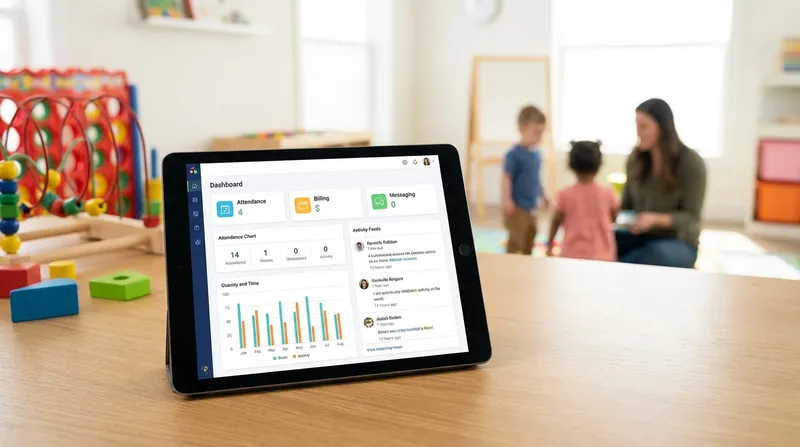
Digitalisation in Daycare: Tools & Software
Daycare software compared: parent apps, admin tools, billing systems, and data protection tips for childcare facilities ...

Parent Communication in Daycare: Best Practices
Successful parent communication in daycare: from daily reports and parent evenings to digital tools and handling complai...
QualiKita: The Path to the Quality Label
QualiKita is the national quality label for daycares in Switzerland. Learn about the certification process, costs, benef...

Daycare Costs Switzerland 2026: Real Prices
How much does a daycare place cost in Switzerland? Current prices by canton, subsidies, tax deductions, and practical mo...
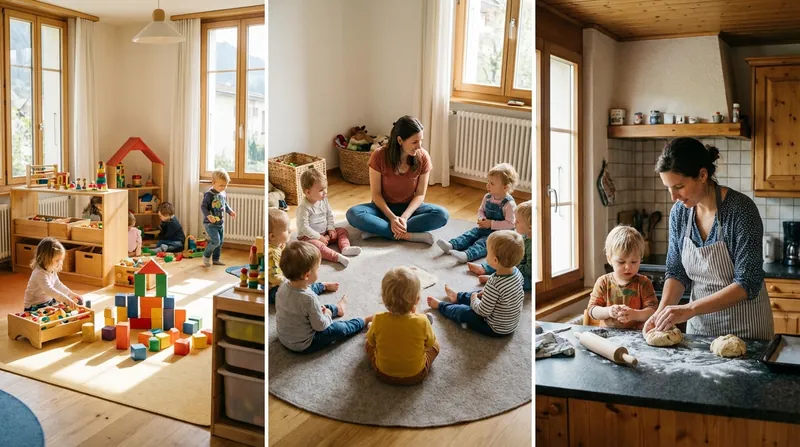
Daycare, Playgroup, or Childminder? The Complete Comparison
Which type of childcare is right for your family? Daycare, playgroup, and childminder compared side by side: age, costs,...