
Why found a daycare? Market, demand and social impact
You want to found a daycare in Switzerland? Then you're facing one of the most exciting — and demanding — entrepreneurial ventures that exist in Switzerland. Demand for daycare places has exceeded supply in many municipalities for years. At the same time, the path from the initial idea to opening day is paved with numerous regulations, licensing procedures and investment decisions.
This guide takes you step by step through all phases: from the needs analysis through the cantonal licence to the first settling-in day. It is aimed at childcare professionals, career changers, and everyone who is seriously thinking about opening their own daycare.
Tip: This article is part of our guide series for providers. You'll find further in-depth articles on individual topics such as legal form, quality certification and financing.
Why found a daycare? Market, demand and social impact
The demand is there — and continues to grow
Switzerland still has a low care rate for preschool children by European comparison. According to the Federal Statistical Office, around a third of families with children under four use institutional care — in urban areas the proportion is significantly higher. Waiting lists of six to twelve months are the norm in many municipalities.
This means for you: if you found in the right location, you'll have high demand from day one. The biggest challenge is not occupancy — but the licensing and the set-up process.
Social impact
A daycare is more than a business. You enable parents to balance family and career, promote early childhood education and contribute to integration. Many municipalities are actively looking for providers who create new places — and support them with subsidies.
Financial perspective
Daycares are not a business where you get rich quickly. But they can be sustainably profitable if you plan carefully. The margins are tight; occupancy is the decisive factor. From an occupancy of 85–90%, a well-run daycare typically becomes profitable. Many successful daycare operators in Switzerland today run multiple locations.
Phase 1: Idea and planning
Before you sign a lease or invest money, you need a solid foundation. The planning phase usually takes three to six months and determines the success of your venture.
Needs analysis in the target municipality
The very first step is the question: Where does demand actually exist? Not every municipality needs a new daycare. And even in municipalities with high demand, it may be that new projects are already in planning.
Here's how to proceed:
- Check population statistics: How many children under 6 live in the municipality? How is the population developing? Growth municipalities with new housing developments are particularly interesting.
- Research existing offerings: How many daycares, playgroups and day-care families are there already? Use our care search or the municipality websites for this.
- Ask about waiting lists: Call existing daycares in the area and ask about waiting times. This gives you an honest picture.
- Consider commuter flows: Many parents look for a daycare at their workplace, not their place of residence. Locations near large employers or train stations are attractive.
Contact the municipality — BEFORE the lease
This point cannot be emphasised enough: Talk to the municipality before you sign anything. The municipality is your most important partner. They can tell you:
- Whether there is demand for additional places
- Whether subsidies are possible (and under what conditions)
- What requirements apply to the location
- Whether other projects are already planned
Many municipalities have a specialist office for supplementary childcare or a social affairs department that is your contact. An early conversation also shows that you are proceeding professionally — this builds trust for future collaboration.
Choosing the legal form
The choice of legal form has implications for your liability, taxes, capital requirements and organisational structure. The most common forms for daycares in Switzerland:
| Legal form | Minimum capital | Liability | Typical for |
|---|---|---|---|
| Sole proprietorship | CHF 0 | Unlimited, personal | Small day nurseries, day-care parents |
| GmbH (LLC) | CHF 20,000 | Limited to share capital | The most common form for daycares |
| Association | CHF 0 | Limited to association assets | Parent initiatives, subsidised daycares |
| AG (Ltd) | CHF 100,000 | Limited to share capital | Larger daycare groups, investors |
Our recommendation: For most founders, the GmbH is the best choice. It offers liability limitation with manageable capital and is perceived as professional by municipalities and banks. More on this in our article Legal form for childcare.
Business plan with 3-year financial projection
No business plan, no financing — and no financing, no daycare. Your business plan should include at least the following points:
1. Executive Summary
- Your idea in one paragraph
- Location, size, pedagogical concept
- Financing needs
2. Market analysis
- Results of your needs analysis
- Competitive landscape
- Target group (age groups, care days)
3. Operating concept
- Pedagogical approach
- Opening hours and care models
- Staff planning
4. Financial plan (3 years)
- Investment budget (fit-out, renovation, initial equipment)
- Revenue planning (number of places x occupancy x rate)
- Cost planning (staff 70–80%, rent 10–15%, material costs, insurance)
- Liquidity planning (especially important in the first 12 months)
- Break-even analysis
5. Risks and countermeasures
- Delay in licensing
- Lower occupancy than planned
- Staff shortage
Start-up capital: How much do you need?
Start-up costs vary greatly depending on size, location and condition of the premises. As a rule of thumb:
- Small daycare (12–18 places): CHF 50,000–100,000
- Medium daycare (24–36 places): CHF 100,000–150,000
- Large daycare (40+ places): CHF 150,000–200,000+
This includes: renovation and fit-out, initial equipment (furniture, play materials, kitchen), licensing costs, company formation costs, and a liquidity buffer for the ramp-up period of at least three to six months.
Financing sources:
- Own capital
- Bank loan (with a solid business plan and collateral)
- Surety cooperatives (e.g. BG Mitte, Saffa)
- Municipal contributions (start-up financing)
- Foundations (e.g. Jacobs Foundation, Mercator)
Phase 2: Licensing — the most important milestone
The operating licence is the central hurdle. Without it, you may not operate a daycare. The procedure is regulated at cantonal level, but the basis is federal.
PAVO: The federal foundation
The Ordinance on the Placement of Foster Children (PAVO) stipulates: anyone who regularly cares for more than five children under twelve during the day needs a cantonal licence. "Regularly" means: more than once per week or on more than 20 days per year.
PAVO defines the framework; the cantons implement the details. This means: the specific requirements differ from canton to canton — sometimes considerably.
Check the specific requirements of your canton early. Our canton pages give you an overview: Zurich, Bern, Lucerne, Aargau, St. Gallen, Basel-Stadt.
Writing the operating concept
The operating concept is the heart of your licensing documents. It shows the supervisory authority that you work professionally and the children are well cared for. A complete operating concept typically includes:
Pedagogical concept:
- Your pedagogical approach (e.g. situation-oriented, Montessori, Reggio, forest pedagogy)
- Education and development goals
- Language support (especially important in multilingual cantons)
- Settling-in model (e.g. Berlin model, Munich model)
- Observation and documentation
Daily structure:
- Detailed daily schedule from door opening to closing
- Meals and rest times
- Free play, guided activities, outdoor time
Nutrition concept:
- Own kitchen or catering
- Handling of allergies and intolerances
- Guidelines for healthy nutrition
Safety concept:
- Emergency plans (fire, accident, illness)
- Hygiene concept
- Medication administration
- Drop-off and pick-up rules
- Child protection concept (prevention of violence and boundary violations)
Parent engagement:
- Settling-in
- Development meetings
- Daily communication (daily reports, app)
- Parents' evenings and parents' council
Space requirements
The premises are one of the most common reasons for delays in the licensing process. Therefore plan carefully:
Minimum area per child:
- Most cantons require 5 to 6 m² of usable play area per care place (excluding ancillary rooms)
- Some cantons distinguish between indoor and total area
Room layout:
- At least one separate rest room for small children
- Cloakroom and entrance area
- Sanitary rooms (child-friendly toilets and changing facility)
- Kitchen (depending on concept, full kitchen or warming kitchen)
- Office / meeting room for parent meetings
- Sufficient storage space
Outdoor area:
- Most cantons require direct access to an outdoor area
- Ideally at least 4–6 m² of outdoor space per child
- Alternative: a public playground in the immediate vicinity (not accepted by every canton)
Building requirements:
- Fire safety inspection by the fire police
- Escape routes (two independent exits are usually mandatory)
- Windows and ventilation according to building regulations
- Freedom from pollutants (asbestos check for older buildings)
- Barrier-free access (varies by canton)
Practical tip: Have the premises informally checked by the licensing authority before signing the lease. Many cantons offer a preliminary inspection. This saves you expensive renovations and unpleasant surprises.
Staff requirements
Staff planning is the second most important element after the premises. The requirements concern both qualifications and the number of care staff.
Daycare manager:
- Qualification as a childcare professional (FaBe EFZ) or equivalent education (e.g. HF Childhood Education, Social Pedagogy)
- Several years of professional experience in childcare
- Additional qualification in management or operations (recommended or required depending on canton)
- Personal suitability (assessed during the licensing process)
Staff-to-child ratio:
The staff-to-child ratio specifies how many children a professional may care for simultaneously. It varies by the children's age and canton. Here is a guide:
| Age group | Staff-to-child ratio (guideline) | Weighting factor |
|---|---|---|
| Infants (0–18 months) | 1 professional : 3 children | Factor 1.5 |
| Toddlers (18 months – 3 years) | 1 professional : 5 children | Factor 1.0 |
| Kindergarten children (3–6 years) | 1 professional : 8 children | Factor 0.75 |
Important: Many cantons use a weighting model instead of fixed ratios. Younger children are weighted more heavily, older children less. Check the exact requirements of your canton.
Qualification requirements for the team:
- At least two-thirds of care staff should have a recognised qualification (FaBe EFZ, HF Childhood Education, or equivalent)
- Apprentices and interns do not count as qualified staff
- At least one qualified person must be present at all times
Criminal record extract and further checks
For all persons who regularly have contact with children, a special private extract from the criminal register is required. This shows whether activity bans or contact bans with minors exist.
- Application to the Federal Office of Justice (available online)
- Cost: CHF 20 per extract
- Must be available before starting work
- Recommendation: renew every two to three years
The licensing procedure
Timeline: Submit your documents at least three months before the planned opening. In many cantons, the procedure takes two to four months — plan generously.
Typical process:
- Submit complete application (forms, operating concept, floor plans, staff planning)
- Review by the cantonal supervisory authority
- Inspection of the premises (often with the fire police)
- Queries and any corrections
- Granting of the licence (limited or unlimited, depending on the canton)
Cantonal specifics:
- Canton of Zurich: The licensing procedure runs via the digital platform Sirona. All documents are uploaded and managed there. More on our Zurich canton page.
- Canton of Bern: The licence is granted by the Youth Office. There are detailed guidelines on room design.
- Canton of Lucerne: The Social Affairs and Society Department is responsible here.
Every canton has its own forms, procedures and contact points. Inform yourself early on the website of your canton or contact the responsible office directly.
Phase 3: Set-up and fit-out
You have the licence — or are well on your way to it. Now it's time for the concrete implementation.
Fit-out and equipment
Fitting out a daycare is more than buying furniture. You need a well-thought-out room design that combines safety, aesthetics and pedagogical functionality.
Basic equipment (budget overview):
| Area | Cost estimate |
|---|---|
| Furniture (tables, chairs, shelves, beds) | CHF 8,000–20,000 |
| Play materials and learning materials | CHF 3,000–8,000 |
| Kitchen (appliances, crockery, supplies) | CHF 5,000–15,000 |
| Outdoor area (play equipment, sandpit) | CHF 5,000–20,000 |
| Changing and sanitary area | CHF 3,000–8,000 |
| Office and administration | CHF 2,000–5,000 |
| Safety (fire protection, first aid) | CHF 1,000–3,000 |
| Total | CHF 27,000–79,000 |
Saving tip: Many daycares buy second-hand furniture from other daycares that are closing or renovating. Municipalities sometimes also have surplus materials. Ask around in your network.
Staff recruitment in times of skilled worker shortage
The shortage of skilled workers in childcare is real. In many cantons, qualified childcare professionals are lacking. You should therefore start your search early and be creative:
- Advertise early: Begin recruiting at least three months before opening
- Offer training places: Those who train apprentices invest in the next generation and build a loyal team
- Create attractive working conditions: Fair wages (follow the GAV for childcare), good social benefits, continuing education opportunities and appreciative leadership
- Create a profile on kizi.ch: Employers who are visible on our platform receive enquiries from parents — and thereby also attract professionals who want to work there
- Consider career changers: People with related qualifications (e.g. teachers, social pedagogues) can be an asset — check cantonal recognition
- Use your network: Training colleges, professional associations (e.g. kibesuisse) and social media are good channels
Insurance
As a daycare operator, you need several types of insurance. Some are legally required, others strongly recommended:
| Insurance | Mandatory? | Purpose |
|---|---|---|
| Business liability | Strongly recommended | Covers damage to children or third parties |
| UVG (accident insurance) | Mandatory from 1st employee | Occupational and non-occupational accidents of employees |
| BVG (pension fund) | Mandatory from CHF 22,050 salary | Occupational pension provision for employees |
| Daily sickness benefit | Recommended | Continued pay during illness |
| Property insurance | Recommended | Furniture, equipment, play materials |
| Legal expenses | Optional | Legal disputes |
SVA registration and social insurance
As soon as you hire staff, you must register with the Social Insurance Office (SVA) of your canton. You are responsible for:
- AHV/IV/EO contributions (employer and employee share)
- ALV contributions (unemployment insurance)
- Family allowances (FAK)
- UVG insurance with an approved accident insurer
- BVG affiliation with a pension fund
Note: SVA registration should take place at least one month before the first salary payment. You can handle payroll yourself, outsource it to an accounting firm, or process it with an industry solution such as bsv-online.
Setting parent rates and creating the care contract
Rate design is a strategic decision. You need to find a balance between cost coverage, competitiveness and accessibility.
Typical daily rates in Switzerland (2026):
- Infants (0–18 months): CHF 120–160 per day
- Toddlers (18 months – kindergarten): CHF 100–140 per day
- After-kindergarten care: CHF 70–100 per day
These rates vary greatly by region, canton and whether the daycare is subsidised.
Care contract: Create a professional care contract that covers the following points:
- Care days and times
- Rate and payment terms
- Settling-in phase
- Notice periods (usual: 2–3 months)
- Holiday and public holiday arrangements
- Drop-off and pick-up times
- Illness rules
- Parents' insurance obligations (liability, health insurance)
Tip: Have the contract reviewed by a legal adviser. Contracts from the internet are often not tailored to Swiss law.
Subsidy agreement with the municipality
Many municipalities subsidise daycare places for lower-income families. This generally works as follows:
- The municipality enters into a service agreement with your daycare
- Parents pay an income-dependent rate (parent contribution)
- The municipality pays the difference to the full rate (municipal contribution)
For you, this has major advantages:
- Higher occupancy, because more families can afford the daycare
- Predictable income through contractual commitment
- Better positioning compared to non-subsidised daycares
Negotiating the subsidy agreement can take several months. Therefore start early — ideally in parallel with the licensing procedure.
Phase 4: Marketing and opening
Your daycare is about to open. Now it's about making families aware of you and taking in the first children.
Create a profile on kizi.ch
As a Swiss childcare marketplace, we connect parents with care providers. A professional profile on kizi.ch brings you visibility among searching families in your region.
Your profile includes:
- Description of your daycare and pedagogical concept
- Photos of the premises and outdoor area
- Opening hours and care models
- Free places and waiting list
- Contact option directly through the platform
Create your daycare profile on kizi.ch now
Google Business Profile
Besides kizi.ch, Google Business is the most important channel for local visibility. When parents google "daycare in [your municipality]", your listing appears directly on the map.
How to set it up:
- Create a listing at business.google.com
- Category: "Daycare centre" or "Childcare"
- Add photos, opening hours and a description
- Ask satisfied parents for reviews
Open day
An open day is the best way to get to know families in person before opening. Plan it two to four weeks before the official start.
Checklist for the open day:
- Invitations to families in the neighbourhood (flyers, letterbox distribution)
- Announcement on kizi.ch, Google Business, social media
- Information to the municipality (many forward enquiries)
- Tour of the premises
- Opportunity for registration and waiting list entry
- Light refreshments for children and parents
Local marketing
- Flyers and posters: In neighbourhood shops, at the paediatrician's, in libraries, on noticeboards
- Municipality website: Many municipalities list care offerings — register yourself
- Social media: A simple Instagram or Facebook page with regular updates
- Network: Midwives, paediatricians, maternity/paternity advice, playgroups — all these organisations refer families
First settling-in sessions
Settling-in is the most critical moment for children, parents and your team. It lays the foundation for a trusting relationship.
Proven models:
- Berlin model: Gradual settling-in over two to four weeks, reference person accompanies, step-by-step separation
- Munich model: Similar, but with a stronger focus on the child's self-determination
Important points:
- Plan enough time — no settling-in under time pressure
- Settle in a maximum of two to three new children at the same time
- Daily exchange with parents during settling-in
- Reference person system: each child has a dedicated contact person
Phase 5: Ongoing operations
The opening is done — but the real work only begins now. A successful daycare requires continuous attention in several areas.
Annual reporting and supervision
The cantonal supervisory authority regularly checks whether you comply with the licensing requirements. Depending on the canton, this includes:
- Annual report: Number of children cared for, staffing levels, special incidents
- Supervisory visits: Announced or unannounced visits by the authority (usually every one to three years)
- Reporting obligation: Changes in management, staff changes, room changes, accidents
Quality development and QualiKita
Quality is not a state but a process. The Swiss quality label QualiKita offers a structured framework for continuous development.
Benefits of QualiKita certification:
- Recognised quality seal for parents
- Systematic self-evaluation
- External review by professionals
- Competitive advantage over non-certified daycares
- Some municipalities prefer or require QualiKita when awarding subsidies
More on the certification process can be found in our article QualiKita certification.
Staff development and continuing education
Your team is your most valuable asset. Invest in:
- Regular team meetings (weekly or fortnightly)
- Supervision and coaching (external, every four to six weeks)
- Continuing education (e.g. language support, conflict management, first aid)
- Staff appraisals (at least annually, ideally twice yearly)
- Health management (burnout prevention is especially important in the industry)
Parent communication in everyday life
Open, professional communication with parents strengthens trust and prevents conflicts:
- Daily reports: Brief written or digital reports about the child's day
- Development meetings: At least twice yearly, a structured conversation
- Parents' evenings: One to two per year on pedagogical topics
- Parents' council: Many daycares have a parents' council as a link between team and parents
- Digital communication: Daycare apps make everyday life easier (absences, information, photos)
Checklist: Founding a daycare in Switzerland
Here is your complete checklist — from the first idea to ongoing operations:
Planning phase
- Needs analysis in the target municipality completed
- Conversation with the municipality held (demand, subsidies, requirements)
- Legal form chosen and company founded
- Business plan with 3-year financial projection created
- Financing secured (own capital, loan, foundations)
- Suitable premises found
Licensing phase
- Operating concept written (pedagogy, daily structure, safety, nutrition)
- Premises pre-checked by licensing authority
- Fire safety inspection by fire police organised
- Daycare manager hired (with required qualifications)
- Staff-to-child ratio calculated and staffing plan created
- Criminal record extracts obtained for all employees
- Licensing application submitted (at least 3 months before opening)
- Licence received
Set-up phase
- Premises renovated and fitted out
- Outdoor area designed
- Play materials and equipment procured
- All employees recruited and contracts signed
- Insurance taken out (liability, UVG, BVG, property)
- SVA registration completed
- Care contracts and terms created
- Parent rates set
- Subsidy agreement negotiated with municipality
- Accounting system set up
Marketing and opening
- Profile on kizi.ch created
- Google Business Profile set up
- Open day held
- Flyers and local marketing started
- First settling-in sessions planned and started
Ongoing operations
- Annual reporting to the canton
- Regular team meetings and supervision
- Continuing education plan for all employees
- Parents' evenings and development meetings
- QualiKita certification pursued
Cost overview: What does founding a daycare cost?
The following table gives you a realistic overview of the costs you can expect. The amounts are estimates and vary depending on location, size and condition of the premises.
| Cost item | Small daycare (12–18 places) | Medium daycare (24–36 places) | Large daycare (40+ places) |
|---|---|---|---|
| Company formation (GmbH incl. notary) | CHF 2,000–4,000 | CHF 2,000–4,000 | CHF 2,000–5,000 |
| Share capital (GmbH) | CHF 20,000 | CHF 20,000 | CHF 20,000–100,000 (AG) |
| Renovation and conversion | CHF 10,000–40,000 | CHF 20,000–60,000 | CHF 40,000–100,000 |
| Furniture and fit-out | CHF 10,000–25,000 | CHF 20,000–45,000 | CHF 35,000–70,000 |
| Kitchen and catering | CHF 5,000–10,000 | CHF 8,000–15,000 | CHF 12,000–25,000 |
| Play materials | CHF 3,000–6,000 | CHF 5,000–10,000 | CHF 8,000–15,000 |
| Outdoor area | CHF 3,000–10,000 | CHF 5,000–15,000 | CHF 10,000–25,000 |
| IT and administration | CHF 2,000–5,000 | CHF 3,000–7,000 | CHF 5,000–10,000 |
| Licensing costs | CHF 500–2,000 | CHF 500–2,000 | CHF 500–2,000 |
| Marketing (initial) | CHF 1,000–3,000 | CHF 2,000–5,000 | CHF 3,000–8,000 |
| Liquidity reserve (3–6 months) | CHF 15,000–40,000 | CHF 30,000–70,000 | CHF 50,000–120,000 |
| Total investment | CHF 70,000–145,000 | CHF 115,000–233,000 | CHF 165,000–480,000 |
Important: The largest ongoing cost block is staff costs. They typically make up 70–80% of operating costs. Calculate these carefully in your financial plan.
Frequently asked questions about founding a daycare (FAQ)
How long does it take to open a daycare?
From the first conversation with the municipality to opening, it usually takes 9 to 18 months. The biggest time consumers are finding suitable premises, the renovation and the licensing procedure. Plan generously and expect delays — especially with building modifications.
Do I need a pedagogical qualification to found a daycare?
No, you don't need a pedagogical qualification yourself. But you need a qualified daycare manager who meets the professional requirements (FaBe EFZ or equivalent qualification plus management experience). If you are not a childcare professional yourself, you focus on the business management side and ensure that pedagogical quality is the responsibility of the manager. Many successful daycare entrepreneurs in Switzerland have a business background.
Can I make money with a daycare?
Yes, but the margins are tight. The key lies in occupancy: from a constant occupancy of 85–90%, a well-run daycare typically becomes profitable. Staff costs make up 70–80% of revenue, rent 10–15%. A margin of 5–15% remains if you work efficiently. Larger daycares and daycare groups with multiple locations can use economies of scale. Subsidy agreements with municipalities provide additional planning security.
What happens if my licence application is rejected?
A rejection is rare if you have carefully checked the requirements. More common are conditions or corrections — for example regarding room design, staff-to-child ratio or the operating concept. You generally receive a written justification and the opportunity to make corrections. In serious cases, you can file an objection. The best protection against rejection: use the pre-consultation of the licensing authority and only submit when you are sure everything is in order.
What ongoing monthly costs should I plan for?
For a medium daycare with 24 places and around 10 employees (full-time equivalents), you can expect the following monthly costs:
- Staff costs: CHF 45,000–60,000
- Rent: CHF 4,000–8,000
- Food: CHF 2,000–4,000
- Consumables: CHF 500–1,500
- Insurance: CHF 500–1,000
- Administration and IT: CHF 500–1,500
- Provisions and miscellaneous: CHF 1,000–2,000
- Total: CHF 53,500–78,000 per month
At full rates of CHF 120 per day and 90% occupancy, this results in monthly revenue of approximately CHF 57,000–65,000 (depending on operating days and care model). Municipal subsidy contributions can additionally increase revenue.
Further resources
In-depth articles on kizi.ch
- Choosing a legal form for childcare
- QualiKita certification: Process, costs, benefits
- Founding a playgroup in Switzerland
- Becoming a childminder: Requirements and licensing
- All guide articles for providers
Cantonal information
Every canton has its own regulations and contact points. Here you'll find the most important canton pages:
- Canton of Zurich — Licensing via the Sirona platform
- Canton of Bern — Youth Office as licensing authority
- Canton of Lucerne — Social Affairs and Society Department
- Canton of Aargau
- Canton of St. Gallen
- Canton of Basel-Stadt
- All cantons at a glance
External resources
- kibesuisse — Swiss Childcare Association (industry association, advice, GAV)
- QualiKita — Quality label for daycares
- SECO — Information on company formation in Switzerland
- SVA — Social Insurance Office of your canton
Conclusion
Founding a daycare is a major project — but a rewarding one. You create a place where children can develop, play and learn. You enable families to balance career and family. And you build a sustainable business.
The key to success lies in thorough preparation: talk to the municipality before you sign contracts. Invest time in a solid operating concept. Plan your finances conservatively. And build a team you trust.
We at kizi.ch support you on this journey. Create your provider profile and become visible to thousands of families looking for the right care place.
Do you have questions about founding a daycare? Write to us — we're happy to help and connect you with experienced daycare founders in your region.
More articles
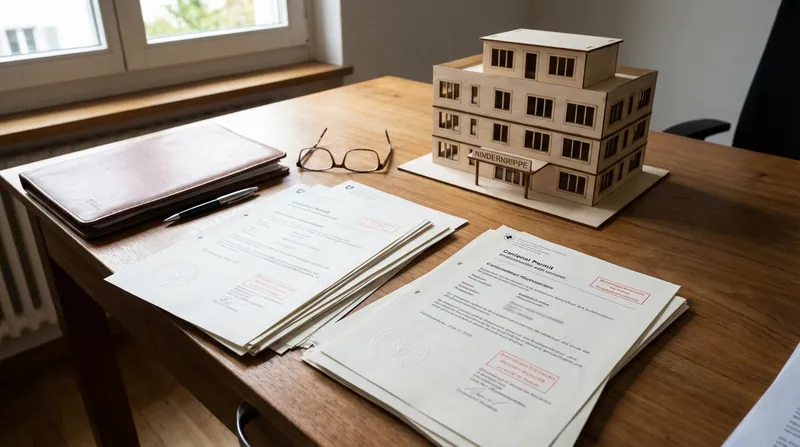
Licensing: Daycare, Playgroup & More
When do you need a licence for childcare in Switzerland? PAVO rules, cantonal differences, and the application process a...

Business Plan for a Daycare: Template & Tips
How to write a convincing business plan for your daycare: market analysis, financial plan, 3-year forecast, and common m...

PAVO: Foster Care Ordinance for Providers
The PAVO regulates licences for daycares and day families in Switzerland. Learn when you need a licence and what gets as...

The Right Legal Form for Your Childcare
Which legal form suits daycare, playgroup, or childminder? LLC, association, sole proprietorship, AG and foundation comp...

Starting a Playgroup: Easier Than You Think
Starting a playgroup in Switzerland: step-by-step guide without licensing. Costs, training, concepts, and tips for getti...
Becoming a Childminder: 10 Steps to Start
Becoming a childminder in Switzerland: training, licensing, insurance, rates, and income. The complete 10-step plan for ...