
PAVO explained simply: The Foster Children Ordinance for childcare providers
PAVO explained simply: The Foster Children Ordinance for childcare providers
If you want to care for children in Switzerland — whether in a daycare, as a day-care family or in a playgroup — you cannot get around PAVO. The "Ordinance on the Placement of Foster Children" (SR 211.222.338) is the central set of rules that determines when you need a licence, what you must fulfil and who supervises you.
The name is misleading: PAVO does not only regulate the placement of foster children in the traditional sense, but applies to all forms of supplementary childcare. This guide explains PAVO to you in an understandable, practical way with concrete examples.
What is PAVO?
PAVO is a federal ordinance that has been in force since 1978 and has been revised several times since (last major revision: 2014). It regulates:
- Who may care for children outside the family
- Under what conditions a licence is granted
- Who carries out supervision
- What reporting and licensing obligations apply
Legal basis
PAVO is based on Art. 316 ZGB (Swiss Civil Code), which states that the placement of foster children requires a licence and supervision. The federal government sets the framework — the cantons are responsible for implementation and can enact stricter rules.
Important: PAVO is a minimum standard. Each canton has its own implementing provisions that can go beyond PAVO. Always check with the canton where you operate.
Who does PAVO apply to?
PAVO applies to all forms of childcare outside the child's own family:
| Form of care | PAVO relevant? | Licence required? |
|---|---|---|
| Daycare (Kita) | Yes | Yes, always |
| Day-care family | Yes | Yes, from a certain number of children (cantonal) |
| Playgroup | Yes (depending on canton) | Partly yes, partly reporting obligation |
| Nanny at the family's home | Conditionally | Generally no (1 child/1 family) |
| Foster family (long-term) | Yes | Yes, always |
| Day camp and holiday care | Yes (depending on duration) | Varies by canton |
| Au pair | No (separate law) | No (employment law) |
Licensing obligation: The thresholds
PAVO distinguishes between reporting obligation and licensing obligation. The exact thresholds are set by each canton.
Daycares and crèches
To operate a daycare, you always need a cantonal licence — regardless of size. The licensing authority varies by canton (usually the Office for Youth and Career Counselling, KESB or a cantonal social services office).
Day-care families
PAVO provides for a licensing obligation for day-care families that regularly care for children for payment. The cantonal thresholds vary:
| Canton | Licence required from | Supervisory authority |
|---|---|---|
| Zurich | From 1 child regularly, if not through an organisation | Office for Youth and Career Counselling (AJB) |
| Bern | From 1 child (regulated through day-care family organisation) | Cantonal Youth Office |
| Lucerne | From 1 child regularly | Department of Social Affairs and Society |
| Basel-Stadt | From 1 child | Department of Education |
| St. Gallen | From 1 child for payment | Office of Social Affairs |
| Aargau | From 1 child regularly | Cantonal Social Services |
| Vaud | From 1 child | Office de l'accueil de jour des enfants |
| Geneva | From 1 child | Service d'autorisation et de surveillance de l'accueil de jour |
Tip: If you are affiliated with a recognised day-care family organisation (e.g. Verein Tagesfamilien, kibesuisse member), it often takes care of the licensing formalities and quality control for you. This simplifies the process considerably.
Playgroups
The situation for playgroups is inconsistent. Some cantons treat playgroups like daycares (licensing obligation), others only require a registration, and still others have no specific rules at all.
The Swiss Playgroup Leaders' Association (SSLV) recommends that playgroup leaders complete a recognised training course. You can find cantonal requirements from the SSLV or your cantonal specialist office.
What is checked during the licensing process?
The licensing authority checks various aspects before granting an operating licence. The exact requirements vary by canton, but the following points are checked almost everywhere:
1. Suitability of care personnel
- Professional qualification: For daycare managers, an HF diploma or FaBe EFZ with professional experience is generally required. For day-care parents, the kibesuisse basic course is often sufficient.
- Personal suitability: A criminal record extract and special private extract (information on activity bans in dealing with children) are mandatory.
- Health suitability: Some cantons require a medical certificate.
2. Premises
- Space ratios: At least 5–6 m² per child (varies by canton)
- Safety: Socket covers, stair gates, window locks, no poisonous plants
- Hygiene: Kitchen, sanitary facilities, changing facilities
- Outdoor area: Garden or nearby playground
- Fire safety: Escape route, fire extinguisher, smoke detectors in accordance with cantonal fire safety regulations
3. Operating concept
- Pedagogical concept: How is care structured?
- Daily structure: Typical care day schedule
- Staff-to-child ratio: Number of children per carer
- Emergency concept: What happens in case of accidents, illness, fire?
- Nutrition concept: Catering, allergies, hygiene
4. Insurance
- Business liability insurance: Protects against damage to children or third parties
- Accident insurance (UVG): Mandatory for staff
A detailed guide to the licensing process can be found in our guide Licence for childcare.
Cantonal supervisory duty: What is inspected?
After the licence has been granted, the matter is not settled. The cantonal supervisory authority carries out regular inspections — both announced and unannounced.
What is checked during inspections?
- Compliance with the staff-to-child ratio
- Condition of premises and safety
- Staff qualifications (are all criminal record extracts up to date?)
- Compliance with the operating concept
- Maintenance of attendance lists
- Interaction with children (observation)
- Documentation (care contracts, emergency plans, medication administration)
Frequency of inspections
- Daycares: Typically every 1–3 years, depending on the canton and facility size
- Day-care families: Annually or every 2 years through the day-care family organisation and/or the cantonal authority
- Playgroups: Varies — from regular inspections to no systematic supervision
What happens in case of violations?
- Deficiency list: The authority gives you a deadline to remedy the deficiencies
- Conditions: Additional conditions are attached to the licence
- Suspension: In serious cases, the licence can be temporarily revoked
- Revocation: In case of grave violations, the licence is permanently revoked
Cantonal differences: A patchwork
The biggest challenge of PAVO is cantonal implementation. What applies in Zurich can be completely different in Bern. Here are some examples of cantonal particularities:
- Zurich: Very detailed requirements, its own Child and Youth Welfare Act (KJHG), licence through the AJB
- Bern: Cantonal childcare act in development, previously strong role of municipalities
- Basel-Stadt: Progressive system with mandatory German language support in pre-kindergarten age
- Lucerne: Childcare voucher system, close cooperation between canton and municipalities
- Vaud: Own cantonal law (LAJE), licence through cantonal specialist office
- Geneva: Strictest regulation, detailed requirements for space ratios and staff
Tip: As your very first step, contact the responsible cantonal specialist office. The staff there know the specific requirements and will help you understand the licensing process.
PAVO and daycares: What daycares must fulfil
The strictest requirements apply to daycares. Here is a summary checklist:
- Operating licence applied for and received from the canton
- Management with recognised qualification (HF diploma or equivalent)
- Staff with professional training according to cantonal requirements
- Criminal record and special private extracts for all employees
- Premises according to cantonal minimum requirements (m² per child, safety)
- Operating concept with pedagogical concept, daily structure, emergency plan
- Business liability insurance taken out
- Staff-to-child ratio maintained according to cantonal ordinance
- Registration with the municipality (depending on canton)
- Fire safety concept approved by fire safety police
The entire founding process is described in our guide Founding a daycare in Switzerland.
PAVO and day-care families: When do you need a licence?
As a day-care family, you care for children at your home. PAVO clearly regulates: Anyone who regularly and for payment cares for children who do not belong to their own household needs a licence.
Typical process
- Contact a day-care family organisation: In most cantons, you must be affiliated with a recognised organisation (e.g. the day-care families association in your region)
- Complete the kibesuisse basic course (5 days, approx. CHF 600–900)
- Home visit by the organisation or authority
- Submit criminal record extract and special private extract
- Receive licence/recognition
- Regular support from the organisation (experience exchange, further training)
More on this in our guide Becoming a childminder.
Frequently asked questions about PAVO
Do I need a PAVO licence as a nanny?
Generally not, if you care for one child from a single family at that family's home. However, if you care for children from multiple families simultaneously or at your own home, a licensing obligation may arise.
What does the licensing process cost?
The fees vary by canton: CHF 0 (free) to CHF 2,000 for daycares. Day-care family licences are usually free if you work through an organisation.
How long does the licensing process take?
For daycares: 3–12 months, depending on the canton and complexity. For day-care families: 4–8 weeks. Allow enough lead time.
Can the licence be revoked?
Yes, in case of serious violations of the conditions. Typical reasons: falling below the staff-to-child ratio, safety deficiencies, lack of staff qualifications. You will usually be given a deadline for improvement first.
What happens if I provide care without a licence?
This is illegal and can be punished with fines and, in extreme cases, criminal consequences. You also have no insurance coverage. Always register your activity properly.
Does PAVO also apply to occasional babysitting?
No. Occasional, unpaid or informal babysitting does not fall under PAVO. The ordinance applies to regular, paid care.
Conclusion: PAVO is your proof of quality
PAVO may seem bureaucratic, but it serves an important purpose: protecting children. A granted licence shows parents that your service has been checked and found to be good. View PAVO not as an obstacle, but as a proof of quality that helps you build trust.
The most important points:
- Check with the canton — the cantonal specialist office is your first point of contact
- Allow enough time — the licensing process takes weeks to months
- Join an organisation — for day-care families this simplifies the process enormously
- Keep your documents up to date — criminal record extracts, training certificates, insurance policies
- Prepare for inspections — a well-run facility has nothing to fear
Make your facility visible: Create your provider profile on kizi.ch now and show parents that you meet all quality standards.
Sources: PAVO — Ordinance on the Placement of Foster Children (SR 211.222.338), Swiss Civil Code Art. 316 ZGB, kibesuisse — Swiss Childcare Association, SSLV — Swiss Playgroup Leaders' Association, cantonal specialist offices for supplementary childcare. As of: February 2026.
More articles
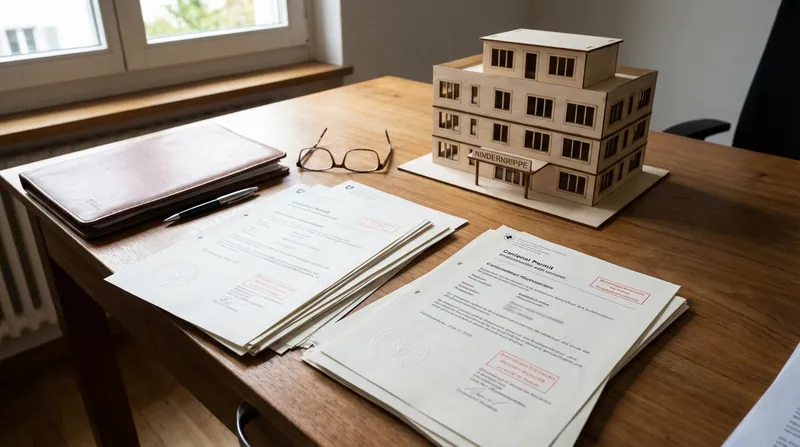
Licensing: Daycare, Playgroup & More
When do you need a licence for childcare in Switzerland? PAVO rules, cantonal differences, and the application process a...

Business Plan for a Daycare: Template & Tips
How to write a convincing business plan for your daycare: market analysis, financial plan, 3-year forecast, and common m...

Starting a Daycare in Switzerland: Full Guide
Starting a daycare in Switzerland: licensing, costs, legal form, staff ratios, and checklist — everything in one guide f...

The Right Legal Form for Your Childcare
Which legal form suits daycare, playgroup, or childminder? LLC, association, sole proprietorship, AG and foundation comp...
Starting a Playgroup: Easier Than You Think
Starting a playgroup in Switzerland: step-by-step guide without licensing. Costs, training, concepts, and tips for getti...
Becoming a Childminder: 10 Steps to Start
Becoming a childminder in Switzerland: training, licensing, insurance, rates, and income. The complete 10-step plan for ...