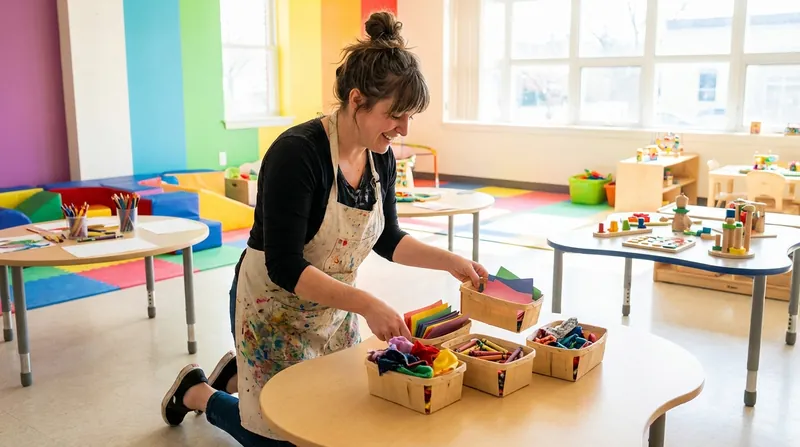
Starting a Playgroup: Easier Than You Think
Starting a Playgroup: Easier Than You Think
You enjoy working with small children, love creative projects and dream of building your own small childcare offering? Then a playgroup might be just the right thing for you. Because what many do not know: starting a playgroup is the simplest form of childcare in Switzerland — in most cantons you do not need a licence for it.
No months-long approval process, no requirements like for a daycare, no minimum team of five professionals. Instead: a well-thought-out concept, a suitable space, a solid education and a great deal of passion. In this guide, we show you step by step how to set up your own playgroup — from the first thought to the first playgroup morning.
Good to know: This article is aimed at everyone who wants to start a playgroup in Switzerland — whether as a main profession, side activity or voluntary commitment in the community.
What Exactly Is a Playgroup?
Before we get into the setup, let us briefly clarify what a playgroup actually is — because the distinction from a daycare or childminder is not always clear to everyone.
A playgroup is a regular, time-limited childcare offering for pre-school children. The key features:
- Age of children: 2.5 to 5 years (until kindergarten entry)
- Frequency: 2 to 4 half-days per week
- Duration per half-day: 2 to 3 hours
- Group size: maximum 10 to 12 children
- Carers: usually 1 playgroup leader plus 1 assistant from approx. 8 children
- Focus: Free play, social learning, creative activities, movement, first separation from parents
Unlike a daycare, the playgroup is not about full-day care but about a pedagogical offering that prepares children for kindergarten and gives them their first experiences in a group. Parents are generally not present — for many children, the playgroup is the first step towards independence.
Playgroups have a long tradition in Switzerland. The Swiss Playgroup Leaders' Association (SSLV) represents over 4,000 playgroups across the country. This shows: demand is high, and there is always room for new, committed playgroup leaders.
No Licence Required — With Exceptions
Here comes the crucial advantage: In most Swiss cantons, you do not need an operating licence for a playgroup. This is because playgroups are considered a time-limited offering and do not fall under the same regulations as daycare centres.
The logic behind this: since the children are only cared for a few hours per week and the parents continue to provide the main care themselves, the legislator classifies the offering differently from a daycare with full-day care.
Exceptions: Valais and Fribourg
However, there are two cantons where a licence is also required for playgroups:
- Canton of Valais: Here, playgroups are subject to the cantonal licensing requirement for supplementary childcare.
- Canton of Fribourg: Stricter requirements also apply here, and a registration obligation or licence is necessary.
Political debate: Whether playgroups should generally be subject to a licensing requirement is repeatedly discussed in Switzerland. Supporters argue for uniform quality standards, opponents warn of over-regulation and the disappearance of small, local offerings. Currently, there is no nationwide trend towards licensing requirements — but it is worth keeping an eye on developments in your own canton.
Important: Even without a licensing requirement, you must register with the municipality in many cantons. Check with your municipality or the responsible cantonal office about the exact regulations. More on this in our article Licence for Childcare: What You Need to Know.
Step by Step to Your Own Playgroup
Step 1: Assess Demand
Before you get started, you should find out whether there is sufficient demand in your area. The following questions will help:
- How many children aged 2.5 to 5 live in your neighbourhood or municipality? Your municipality's residents' registration office can provide these figures.
- Are there already playgroups nearby? If so, are they full? Do they have waiting lists?
- Are there new development areas with young families that do not yet have an offering?
- What do other parents say? Talk around the neighbourhood, ask in mothers' and fathers' groups.
Rule of thumb: If you have at least 30 to 50 families with children of the right age in your catchment area and there are no or only fully booked playgroups, your chances are very good.
Step 2: Choose a Concept
Not all playgroups are the same. Consider which concept best suits you — and the demand in your region:
- Classic indoor playgroup: Takes place in a fixed room. Crafts, free play, snack, stories, singing. The classic.
- Forest playgroup: The children spend the morning outdoors in the forest. Nature education, discovery, movement. Very popular and on trend.
- Farm playgroup: On a farm. Feeding animals, experiencing nature, practical learning. Particularly attractive in rural areas.
- Mixed concept: Combination of indoor and outdoor. For example, outdoors in good weather, indoors when it rains.
Your concept influences everything else — the space requirements, equipment, education and marketing. Take time for this decision.
Step 3: Find a Space
For a classic indoor playgroup, you need a suitable space. Popular options:
- Parish hall: Many parishes rent out rooms cheaply, often already with a kitchen and toilet.
- Neighbourhood centre or community hall: Municipalities sometimes make rooms available for children's activities.
- Own premises: A basement room, a converted garage or a room on the ground floor — possible with appropriate adaptation.
- Commercial premises: In some municipalities, you can find affordable commercial spaces that can be converted.
Space requirements:
- Safety: No sharp edges, socket protectors, safe stairs or no stairs at all.
- Floor: Washable and robust. Children paint, spill and romp — carpet is impractical, linoleum or wood is ideal.
- Sanitary: At least one toilet, ideally with a child seat. A washbasin at child height is a big plus.
- Kitchen: A small kitchenette for preparing snacks is perfectly sufficient.
- Space: As a rule of thumb, approximately 3 to 4 square metres per child, so at least 30 to 50 square metres for a group.
- Outdoor area: A small garden or playground nearby is ideal but not mandatory.
Budget: Expect CHF 500 to 1,500 per month in rent, depending on the region and space. In urban areas like Zurich or Bern rather at the upper end, in rural areas often significantly cheaper. Some municipalities provide spaces at reduced rates or free of charge if the offering serves a public interest — it is always worth asking.
Step 4: Complete Training
Training as a playgroup leader is not legally required in most cantons — but strongly recommended. And for several reasons:
- You learn how to professionally handle toddlers in groups.
- You gain pedagogical knowledge on developmental psychology, group dynamics and conflict resolution.
- Parents trust a trained leader significantly more.
- The SSLV recommends recognised training for its members.
- Many municipalities require training as a prerequisite for subsidies.
Where can you train?
The SSLV (Swiss Playgroup Leaders' Association) maintains a list of recognised training institutes. The training typically comprises:
- Duration: 100 to 300 hours (depending on the provider), spread over several months
- Content: Pedagogy, developmental psychology, play pedagogy, working with parents, legal basics, first aid
- Costs: CHF 2,000 to 6,000 depending on scope and institute
- Qualification: Certificate as a playgroup leader
Some well-known training centres include the Institute for Early Childhood Education (IfK), the Academy for Playgroup Leadership and various regional specialist schools. Check whether your canton or municipality partially covers the training costs — some do.
Step 5: Procure Equipment and Materials
Now it gets concrete: you need materials. Here is a realistic budget overview for the initial equipment:
| Category | Budget |
|---|---|
| Craft materials (paints, paper, glue, scissors, modelling clay) | CHF 300–500 |
| Toys (building blocks, dolls, vehicles, puzzles, books) | CHF 500–1,000 |
| Furniture (children's tables, chairs, shelves, coat rack, mats) | CHF 500–1,500 |
| Snack equipment (dishes, cups, serviettes, jug) | CHF 100–200 |
| Total initial equipment | CHF 1,400–3,200 |
Saving tips:
- Ask parents for toy donations — many families have toys their children no longer use.
- Second-hand furniture from charity shops or online platforms is often in perfect condition.
- Basic materials like cardboard, natural materials (stones, leaves, chestnuts) cost nothing and are pedagogically valuable.
- Some municipalities grant start-up contributions for new childcare offerings.
Step 6: Clarify Legal Matters and Insurance
Even if you do not need a licence, there are legal aspects you must arrange:
Insurance:
- Business liability insurance: Absolutely necessary. Covers damage that happens to children in your care. Costs: approx. CHF 300 to 600 per year.
- Building insurance or contents insurance: Protects your furnishings and materials.
- Accident insurance: Clarify whether the children are covered through their parents' health insurance or whether you need separate accident insurance for the playgroup.
Legal form and social insurance:
- If you run the playgroup as a sole proprietorship, you must register with the social insurance office as self-employed.
- Alternatively, you can establish an association, which can offer tax advantages and limits personal liability.
- From an annual turnover of CHF 100,000, you are liable for VAT — most playgroups are well below this.
- You must pay AHV/IV/EO contributions as a self-employed person. Expect around 10% of your income.
Detailed information can be found in our article Insurance for Childcare: What You Need.
Step 7: Create Parent Contracts
A clean contract protects you and gives parents security. Your playgroup contract should contain the following points:
- Playgroup details: Name, address, leadership, contact details
- Child details: Name, date of birth, allergies, special needs
- Care times: Which half-days, times, holiday and public holiday arrangements
- Costs and payment: Price per half-day or semester, payment terms, due dates
- Notice period: 1 to 2 months is common, usually at the end of a semester
- Absences and illness: Arrangements for when the child is ill (no attendance with fever, stomach bugs, etc.)
- Liability: Note on parents' insurance obligation
- Emergency contacts: Phone numbers of parents and a substitute person
- Consent declarations: Photos, excursions, applying sunscreen, etc.
The SSLV provides contract templates to its members — another reason to join the association.
Step 8: Set Prices
Prices for playgroups vary by region, but here are the usual guidelines:
- Per half-day (2–3 hours): CHF 15 to 25
- Billing: Usually per semester (August to January / February to July)
- Material costs: Some playgroups additionally charge a material contribution of CHF 50 to 100 per semester
Price example: A child attends 2 half-days per week at CHF 20. With approx. 20 weeks per semester, this equals CHF 800 per semester per child.
Find out about the prices of other playgroups in your region to remain competitive. Also note that some municipalities subsidise parent contributions — enquire with your municipality whether this is the case.
Step 9: Marketing — Finding Families
Your playgroup is set up — now families need to hear about it. Here are the most effective channels:
- Create a profile on kizi.ch: Register as a provider on kizi.ch and create an informative profile. Parents search here specifically for playgroups near them.
- Distribute flyers: In letterboxes in the neighbourhood, on notice boards in supermarkets, bakeries and neighbourhood meeting points.
- Paediatrician practices: Ask the paediatrician if you may display flyers. Parents with toddlers visit regularly.
- Parents' centres: These meeting points are ideal for making your offering known.
- Neighbourhood groups on social media: Facebook groups, WhatsApp groups or Nextdoor — everywhere where parents from the neighbourhood exchange.
- Municipality website and gazette: Some municipalities list local childcare offerings free of charge.
- Word of mouth: As soon as the first families are satisfied, word about your offering spreads. Happy parents are the best advertisement.
Step 10: Get Started — Your First Playgroup Morning
Everything is prepared? Then start with a taster morning. Invite interested families to get to know the playgroup without obligation:
- Parents and children come together. The children can explore the space, the parents get to know you and your concept.
- Show the daily routine: A short circle with a song, a craft activity, free play, a shared snack — this gives everyone a realistic impression.
- Answer questions: Parents want to know how the settling-in process works, what happens when the child cries, how you handle conflicts.
- Have contracts ready: Those who are convinced can sign up directly.
After the taster morning, you start with regular operations. Plan a gentle settling-in for the first weeks: the children may initially come for just one hour, with parents staying nearby. Step by step, you extend the care time until the children feel comfortable.
Special Playgroup Formats
Forest Playgroup
The forest playgroup has become enormously popular in recent years — and for good reason. Children spend the entire morning outdoors in the forest, in almost any weather.
Advantages:
- No room rental budget needed (the forest is free)
- Children move a lot and develop gross and fine motor skills
- Nature experiences that are rare in the city
- Strengthening of the immune system through time in fresh air
- Creative play with natural materials instead of plastic toys
What you need:
- A suitable forest site with agreement from the forester or municipality
- A shelter or teepee/tarp for bad weather
- Seating: Tree trunks, seat cushions, tarpaulins
- First aid kit and a mobile phone for emergencies
- Weatherproof clothing for yourself (parents must dress their children accordingly)
- Water canister and simple hand-washing station
- Transport for materials (handcart, rucksack)
Tip: Find out about additional training in nature education. The SSLV and various institutes offer specific further training for forest playgroup leaders.
Farm Playgroup
A farm playgroup combines childcare with experiences on the farm: feeding animals, collecting eggs, playing in the hay, harvesting vegetables, admiring the tractor.
Advantages:
- Unique experience that city children rarely know
- Children learn where food comes from
- Animals promote empathy and a sense of responsibility
- Diverse sensory experiences (smells, textures, sounds)
Requirements:
- You need access to a farm — either your own or a cooperation with a farming operation.
- Safety must be guaranteed: no access to machinery, secure fences for animals, clean areas for snacks.
- Additional insurance for the farm operation may be necessary.
Income Calculation: What Do You Earn as a Playgroup Leader?
A realistic calculation for a well-attended playgroup:
Assumptions:
- 10 children per group
- 3 half-days per week
- CHF 20 per child per half-day
- 38 operating weeks per year (minus holidays and public holidays)
Income:
- 10 children x 3 half-days x CHF 20 x 38 weeks = CHF 22,800 per year
- Plus material contributions: 10 children x CHF 100 = CHF 1,000
- Total income: approx. CHF 23,800
Expenses:
- Room rental: CHF 800 x 12 = CHF 9,600
- Material and consumables: CHF 1,500
- Insurance: CHF 500
- SSLV membership and training: CHF 500
- Miscellaneous (cleaning, snack ingredients, administration): CHF 1,200
- Total expenses: approx. CHF 13,300
Remaining income: approx. CHF 10,500 per year (before social contributions and taxes)
With approx. 12 working hours per week (3 half-days of 3 hours of care plus preparation/follow-up and administration), this corresponds to an hourly rate of approx. CHF 23.
Reality check: A single playgroup is generally not a full-time income. Many playgroup leaders run two groups (e.g. Monday/Wednesday and Tuesday/Thursday) or combine playgroup leadership with another activity. With two groups of 10 children, you can approximately double your income.
Playgroup vs. Daycare: The Key Differences
Parents often ask how a playgroup differs from a daycare. Here is the overview:
| Criterion | Playgroup | Daycare |
|---|---|---|
| Care time | 2–3 hours, 2–4x per week | Full day, 5 days per week |
| Age | 2.5–5 years | 3 months to school age |
| Licence | Usually not required | Cantonal licence required |
| Group size | 10–12 children | 12–24 children (depending on size) |
| Staff | 1–2 people | Professional staff per care ratio |
| Meals | Snack | Breakfast, lunch, snack |
| Cost for parents | CHF 15–25 per half-day | CHF 80–150 per day |
| Setup effort | Low | High (licence, conversion, staff) |
| Focus | Play, social skills, creativity | Comprehensive care and development |
| Nap time | No | Yes (for toddlers) |
The playgroup is therefore not a substitute for a daycare but a complementary offering — ideal for families where one parent works part-time or who want to gently introduce their child to group care.
Frequently Asked Questions (FAQ)
Do I need a pedagogical education to lead a playgroup?
A formal education is not legally required in most cantons. However, we strongly recommend it. Training as a playgroup leader through the SSLV or a recognised institute gives you the necessary pedagogical knowledge and strengthens parents' trust. Some municipalities also require training as a condition for subsidies. The investment of CHF 2,000 to 6,000 and a few months of further education is definitely worthwhile in the long term.
Can I run a playgroup in my own home?
In principle yes, provided the space is suitable (enough room, safe, washable floor, toilet, separate kitchenette). However, note the house rules and speak with your landlord. In rented homes, commercial use can be problematic. A separate entrance or a room on the ground floor is ideal so that operations do not disturb the neighbours. Also check your municipality's building regulations regarding commercial use of residential spaces.
What do I do if a child gets injured at the playgroup?
Good preparation is everything: complete a first aid course for children (integrated into many playgroup training courses), keep a complete first aid kit ready and have all parents' emergency numbers to hand. For minor injuries (grazed knee, small cut), you treat the child and inform the parents at pick-up. For more serious injuries, call the parents immediately and in an emergency call 144. Document every incident in writing. Your business liability insurance covers damage that occurs under your supervision.
Is it worth joining the SSLV?
Yes, joining the Swiss Playgroup Leaders' Association (SSLV) is worthwhile for several reasons: you gain access to contract templates, fact sheets and pedagogical materials. You benefit from further training offerings and networking events with other playgroup leaders. The SSLV represents your interests at the political level and informs about relevant legislative changes. Additionally, the SSLV label strengthens parents' trust. Membership costs between CHF 100 and 250 per year depending on the canton and offering — a manageable investment with great benefit.
Next Steps
Are you ready? Then get started. Here are the key resources once more:
- Licence for Childcare: What You Need to Know — Detailed information on licensing requirements in your canton
- Insurance for Childcare — Which insurance you need and what it costs
- Register your playgroup on kizi.ch — Create your free profile and be found by parents in your region
Starting a playgroup is not a bureaucratic monster. It is a manageable project that you can set up in a few months with commitment, good training and a clear concept. The demand for high-quality, local childcare is great throughout Switzerland — and with your playgroup, you can make a real difference in the lives of families in your neighbourhood.
Best of luck on your journey to your own playgroup!
More articles
Licensing: Daycare, Playgroup & More
When do you need a licence for childcare in Switzerland? PAVO rules, cantonal differences, and the application process a...

Business Plan for a Daycare: Template & Tips
How to write a convincing business plan for your daycare: market analysis, financial plan, 3-year forecast, and common m...

Starting a Daycare in Switzerland: Full Guide
Starting a daycare in Switzerland: licensing, costs, legal form, staff ratios, and checklist — everything in one guide f...

PAVO: Foster Care Ordinance for Providers
The PAVO regulates licences for daycares and day families in Switzerland. Learn when you need a licence and what gets as...

The Right Legal Form for Your Childcare
Which legal form suits daycare, playgroup, or childminder? LLC, association, sole proprietorship, AG and foundation comp...
Becoming a Childminder: 10 Steps to Start
Becoming a childminder in Switzerland: training, licensing, insurance, rates, and income. The complete 10-step plan for ...