
Au Pair in Switzerland: Requirements & Costs
Au Pair in Switzerland: Requirements & Costs
An au pair can be an attractive childcare solution for Swiss families — especially if you need flexible support with household and childcare while also appreciating cultural exchange. However, the au pair system in Switzerland is strictly regulated: clear rules apply for working hours, pocket money, insurance, and residence permits. This guide explains everything you need to know as a host family — from the requirements and costs to the differences between an au pair and a nanny.
What Is an Au Pair?
Definition and Basic Concept
An au pair (French: "on a reciprocal basis") is a young person from abroad who temporarily lives with a host family. The basic idea: the au pair helps with household tasks and childcare, receives board, lodging, and pocket money in return — and in exchange gets to know the language and culture of the host country. This is deliberately not a regular employment relationship but a cultural exchange with a childcare component.
Au Pair vs. Nanny: The Key Differences
Many parents confuse au pairs and nannies. Yet there are fundamental differences — legally, financially, and organisationally:
| Criterion | Au Pair | Nanny |
|---|---|---|
| Legal basis | Au pair ordinance, cultural exchange | Regular employment relationship (CO) |
| Age | 18–25 years (up to 30 in some cantons) | No age limit |
| Working hours | Max. 30 hours/week | Per employment contract (often 40–42 hrs) |
| Compensation | Pocket money CHF 590–790/month | Salary CHF 25–35/hour (gross) |
| Living situation | Lives with the host family (own room mandatory) | Own flat (generally) |
| Qualifications | No formal training required | Often specialist training (FaBe, pedagogy, etc.) |
| Duration of stay | Max. 12 months (1 extension possible) | Open-ended possible |
| Language course | Mandatory (min. 3–4 hrs/week) | No language course required |
| Social insurance | Limited (KVG, UVG) | Full social insurance obligations |
If you're looking for a long-term, professional childcare solution, a nanny is probably the better choice. Read our detailed guide Hiring a Nanny in Switzerland: Salary, Contract & Insurance. If you'd like an overview of all childcare options first, our Comparison: Daycare, Playgroup, or Childminder will help.
Requirements: Who Can Become an Au Pair — and Who Can Host One?
Requirements for the Au Pair
Switzerland sets clear requirements for au pairs:
- Age: Between 18 and 25 years (some cantons allow up to 30)
- Nationality: Access is easier for EU/EFTA citizens. Stricter visa rules apply for third-country nationals (see Visa section)
- Language skills: Basic knowledge of the host region's language is recommended but not mandatory — the language course on site is compulsory
- Childcare experience: Not formally required, but strongly recommended by agencies. A babysitter course, sibling care, or an internship in childcare is a plus
- Health: A medical certificate is generally required
- No own household: Au pairs are typically single and without children of their own
Requirements for the Host Family
As a host family, you must also meet certain criteria:
- Own room: The au pair must have their own, lockable room with a window — no pass-through room, no basement
- At least one child under 18: The family must have at least one child in the household who needs care
- Language: The family language should be the regional language (German, French, or Italian) so the au pair can actually learn the language
- Contract: A written au pair contract is mandatory. Many cantons provide template contracts
- Registration: You must register the au pair with the municipality (residents' registration) and the relevant authorities
Working Hours and Duties
Maximum Working Hours: 30 Hours per Week
The maximum working time for an au pair in Switzerland is 30 hours per week, including evening babysitting. That averages 6 hours per day on a 5-day week. Overtime is not permitted.
Typical Au Pair Duties
| Task | Typical | Not permitted |
|---|---|---|
| Taking children to school/daycare | Yes | — |
| Playing, crafting, reading with children | Yes | — |
| Preparing meals for children | Yes | — |
| Light housework (vacuuming, washing up) | Yes | — |
| Washing/ironing children's laundry | Yes | — |
| Heavy physical work (gardening, renovation) | — | Not permitted |
| Caring for adults in need of care | — | Not permitted |
| Cleaning the entire house as main task | — | Not permitted |
| Working for third parties (neighbours, friends) | — | Not permitted |
Free Time and Language Course
The au pair is entitled to:
- At least 1 free day per week (usually at the weekend)
- At least 1 free evening per week
- Language course attendance: 3–4 hours per week (you as host family bear the costs)
- 4 weeks of holiday for a 12-month stay (pro-rated for shorter stays)
Important: Language course time does not count as working time. The language course is a central part of the cultural exchange and must be facilitated.
Costs: What an Au Pair Really Costs
Monthly Costs Overview
Many families underestimate the total cost of an au pair. Here's a realistic breakdown:
| Cost type | Amount per month |
|---|---|
| Pocket money | CHF 590–790 (varies by canton) |
| Language course | CHF 150–300 |
| Health and accident insurance | CHF 150–250 |
| Food (board) | CHF 300–500 (estimated) |
| Public transport pass / mobility | CHF 50–100 |
| Agency fee (converted per month) | CHF 80–150 |
| Miscellaneous (SIM card, outings) | CHF 30–50 |
| Total estimated | CHF 1,350–2,140/month |
Plus one-off costs:
| One-off costs | Amount |
|---|---|
| Agency placement fee | CHF 1,000–2,000 |
| Residence permit | CHF 50–150 (varies by canton) |
| Room furnishing (if needed) | CHF 200–500 |
Pocket Money: Cantonal Guidelines
Pocket money for au pairs is not uniformly regulated across Switzerland. Cantonal labour market authorities provide guideline amounts:
| Canton/Region | Pocket money per month |
|---|---|
| Zurich | CHF 700–790 |
| Bern | CHF 590–700 |
| Basel-Stadt | CHF 700 |
| Lucerne | CHF 590–650 |
| Geneva | CHF 700–790 |
| Vaud | CHF 700–790 |
| St. Gallen | CHF 590–650 |
| Aargau | CHF 590–700 |
Note: The pocket money is not a salary in the employment law sense. It is in principle subject to AHV contributions (exception: au pairs from EU/EFTA states with an A1 certificate from their home country).
Cost Comparison: Au Pair vs. Nanny vs. Daycare
Is an au pair financially worthwhile? That depends on your childcare needs:
| Childcare type | Cost/month (approx.) | Hours/week | Effective cost/hour |
|---|---|---|---|
| Au pair | CHF 1,350–2,140 | Max. 30 | CHF 11–18 |
| Nanny (part-time 50%) | CHF 2,600–3,600 | 20–21 | CHF 31–43 |
| Daycare (3 days/week) | CHF 1,200–2,700 | Approx. 30 | CHF 10–23 |
| Day-care family (3 days/week) | CHF 750–1,400 | Approx. 30 | CHF 6–12 |
An au pair sits cost-wise between a day-care family and a nanny. The big advantage: care takes place in your home, the au pair is flexibly deployable (mornings, evenings, weekends) and you get additional household help. If you want to work out your total childcare budget, our guide Planning Childcare into the Family Budget will help.
Visa and Residence Permit
EU/EFTA Citizens
Au pairs from EU/EFTA states benefit from the Free Movement of Persons Agreement:
- Short-term residence permit L: For stays of up to 12 months
- Registration: Within 14 days of entry at the municipality of residence
- No visa needed: EU/EFTA citizens can enter Switzerland without a visa and apply for the permit on site
- Work permit: The L permit automatically authorises work as an au pair
Third-Country Nationals
For au pairs from non-EU/EFTA states, the process is more involved:
- Quotas: Au pair permits for third-country nationals are subject to cantonal quotas. Not every canton issues these permits
- Visa: The au pair must apply for a D visa (national visa) at the Swiss embassy in their home country before entry
- Processing time: 6–12 weeks — plan ahead
- Additional requirements: Some cantons require proof of language skills and a motivation letter
- Maximum duration of stay: Generally 12 months, an extension of a further 12 months is possible in some cantons
The Permit Process Step by Step
- Find an au pair (via agency or privately)
- Sign the au pair contract (use a cantonally recognised template)
- Submit the application to the cantonal migration office / labour market authority
- Await the permit (EU/EFTA: a few days; third countries: 6–12 weeks)
- Au pair enters and registers at the municipality of residence
- Take out health insurance (if not already in place)
Tip: Work with a recognised au pair agency. They know the cantonal requirements and handle the paperwork. This saves you a lot of time and stress.
Insurance: What You Must Cover as a Host Family
Health Insurance
Au pairs must be health insured in Switzerland. There are two options:
- Swiss basic insurance (KVG): Take out within 3 months of entry. Cost: approx. CHF 150–250/month (depending on canton and deductible)
- EU Health Insurance Card (EHIC): Au pairs from EU states can use their insurance from their home country — but check whether the coverage is sufficient in Switzerland
Accident Insurance
As a host family, you are responsible for your au pair's accident insurance:
- Occupational accident insurance (BU): Mandatory from the first working day. You must register the au pair with a UVG insurer
- Non-occupational accident insurance (NBU): Also mandatory, since the au pair works more than 8 hours per week
- Cost: Approx. CHF 20–50/month
Liability Insurance
Liability insurance for the au pair is strongly recommended, even though it is not legally required. Check whether your existing family liability insurance covers the au pair as a household member — this is possible with many insurers.
AHV/IV/EO Contributions
The au pair's pocket money is in principle subject to AHV contributions. As a host family, you must:
- Register the au pair with the AHV compensation office
- Account for employer and employee contributions (total approx. 10.6% on the pocket money)
- Exception: Au pairs from EU/EFTA states who present an A1 certificate are socially insured in their home country
Au Pair Agencies in Switzerland
Why Use an Agency?
You can also find an au pair privately (e.g. via online platforms). However, a recognised agency offers significant advantages:
- Pre-selection: The agency checks references, criminal record extract, and motivation
- Contract templates: Cantonally compliant contracts are provided
- Authority contacts: The agency handles permits and registrations
- Mediation: In case of conflicts between host family and au pair, the agency mediates
- Replacement au pair: Good agencies find a replacement if things don't work out
Recognised Agencies (Selection)
| Agency | Region | Features |
|---|---|---|
| Pro Filia | All of Switzerland | Long-standing, since 1902, non-profit |
| Au Pair Link | German-speaking Switzerland | Online matching, personal support |
| IAPA members | International | International Au Pair Association — quality standard |
| Compagna | All of Switzerland | Counselling and support, also for young women in difficult situations |
Agency Costs
The placement fee is generally between CHF 1,000 and CHF 2,000. This typically includes:
- Matching and pre-selection
- Contract support
- Help with official procedures
- Support during the stay
- Often: replacement placement in case of early termination
Tips for a Successful Au Pair Experience
Before Arrival
- Prepare the room: Bed, wardrobe, desk, Wi-Fi, key. The room should be a retreat, not a storage room
- Write down house rules: When are meals? How is the kitchen used? Which areas are private? Clear rules prevent conflicts
- Prepare the children: Explain to your children who is coming, why, and what will change
- Create a weekly schedule: A clear plan with tasks, times, and days off gives both sides orientation
During the Stay
- Weekly check-in: Take 15 minutes once a week to discuss how things are going — for both sides
- Include rather than instruct: An au pair is a temporary family member, not an employee. Shared meals and activities strengthen the relationship
- Facilitate the language course: Make sure the language course is feasible time-wise and support the au pair in their learning
- Give freedom: The au pair needs time for friends, outings, and their own activities — that's part of the cultural exchange
- Address conflicts: If something isn't right, bring it up kindly and directly. Problems that are ignored grow bigger
Au Pair and Your Children
An au pair is a supplementary carer, not replacement parents. Keep in mind:
- Clear responsibility: The au pair cares for the children but does not make fundamental parenting decisions
- Safety: Make sure the au pair knows emergency numbers, where the first aid kit is, and how to react in an emergency
- Allergies and medications: Document everything in writing
- Duty of supervision: The au pair may be alone with the children but does not bear parental responsibility in a legal sense
Common Problems and Solutions
The Au Pair Doesn't Fit the Family
It can happen that the chemistry isn't right — despite careful selection. In this case:
- Seek a conversation: Often it's misunderstandings or cultural differences
- Involve the agency: The agency can mediate and suggest solutions
- Use the trial period: Most contracts include a trial period of 1–3 months
- Early termination: In case of serious problems, the contract can be terminated with notice or (for serious reasons) without notice
The Au Pair Falls Ill
When the au pair is ill:
- They are entitled to continued payment (pocket money) under the CO provisions
- Health insurance covers the medical costs
- You need an alternative childcare solution — a emergency network helps here (grandparents, neighbours, emergency nanny via kizi.ch)
The Au Pair Wants to Leave Early
Reasons can include homesickness, family problems in the home country, or dissatisfaction. Respect the decision, observe the contractually agreed notice period (usually 1 month), and settle open insurance and official matters cleanly.
Frequently Asked Questions (FAQ)
From what age of my children does an au pair make sense?
In principle from baby age, although most families engage an au pair from toddler age (1–2 years). Bear in mind: an au pair is typically between 18 and 25 and has no professional training in infant care. For babies under 6 months, an experienced nanny or a daycare with an infant section is often more suitable.
Can I combine an au pair and a daycare?
Yes, and this is actually a very popular solution. The au pair takes the children to daycare in the morning, picks them up in the afternoon, and looks after them until you get home from work. In between, the au pair attends the language course and does light housework.
Do I have to pay for a public transport pass for the au pair?
There is no legal obligation, but it is customary and strongly recommended. The au pair needs mobility for the language course, shopping, and leisure activities. A half-fare card plus a local public transport pass is a fair solution.
What happens if the au pair breaks something?
This is where liability insurance comes in. Check whether your family liability insurance also covers household members. Alternatively, the au pair can take out their own liability insurance (cost: approx. CHF 5–10/month).
Is the au pair allowed to drive?
In principle yes, if they hold a valid driving licence (EU licences are recognised in Switzerland; third-country licences may need to be converted). However, be sure to clarify the insurance question: your au pair must be registered as a driver on the car insurance, otherwise you face recourse claims in case of an accident.
Conclusion: Is an Au Pair Right for Your Family?
An au pair is a unique childcare solution that goes well beyond mere childcare. You get flexible everyday support, your children get to know a new culture, and a young person gets the chance to discover Switzerland. At the same time, an au pair is no substitute for professional full-time care — they have limited working hours, no pedagogical training, and are typically away from home for the first time.
Checklist: Au Pair — Is It Right for You?
- You need a maximum of 30 hours of childcare per week
- You have a separate room (with window, lockable) for the au pair
- You are open to an additional person in the household
- You can afford CHF 1,350–2,140 per month
- You want to offer your children cultural exchange
- You are willing to take on responsibility as a host family
If you're not yet sure which form of childcare is right, our Comparison: Daycare, Playgroup, or Childminder provides a comprehensive side-by-side look at all options. And if you're interested in the costs of different childcare types, check out our guide Planning Childcare into the Family Budget.
Sources: State Secretariat for Migration (SEM), cantonal labour market authorities, Pro Filia, IAPA — International Au Pair Association, Federal Act on Foreign Nationals and Integration (AIG). As of: February 2026.
More articles

Daycare, Playgroup, or Childminder? The Complete Comparison
Which type of childcare is right for your family? Daycare, playgroup, and childminder compared side by side: age, costs,...

Finding a Childminder: The Complete Guide
How to find the right childminder. About associations, costs, contracts, and what you should look for....

Playgroup: Everything Parents Need to Know
Playgroup from what age? Costs, types, and why playgroups are so important for kindergarten preparation....
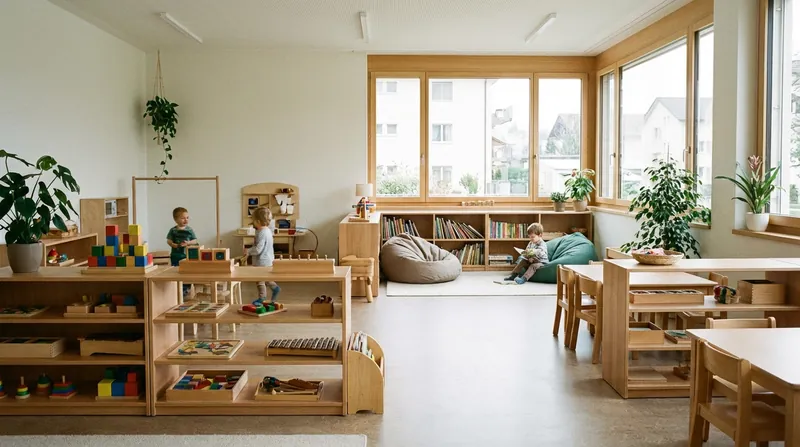
Good Daycare: 10 Quality Criteria for Parents
How to recognise a good daycare? 10 evidence-based quality criteria, warning signs, and a printable checklist for parent...

Hiring a Nanny in Switzerland: Cost & Contract
Want to hire a nanny? Everything about wages, social insurance, contracts, nanny-sharing, and tax deductions as a privat...
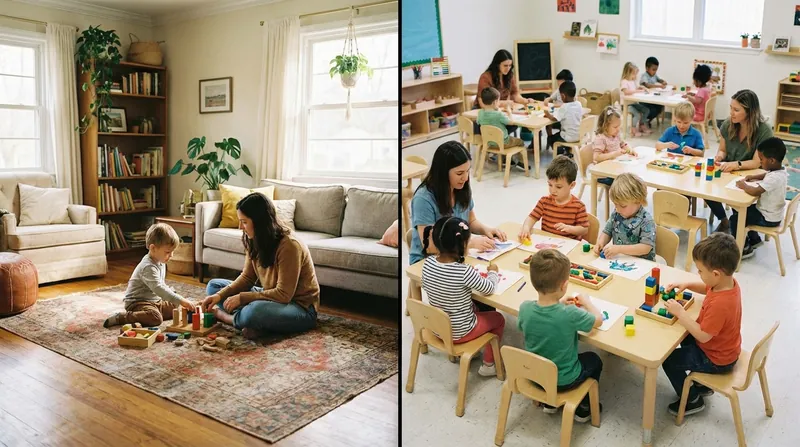
Day Family or Daycare? An Honest Comparison
Day family or daycare: costs, flexibility, staff ratios, and quality compared directly — plus tips for combination model...